

Creative · Field notes 02
Before the camera rolls: a better brief for an interior film.
A room has a story. Decide what the film needs to communicate before choosing the shots.
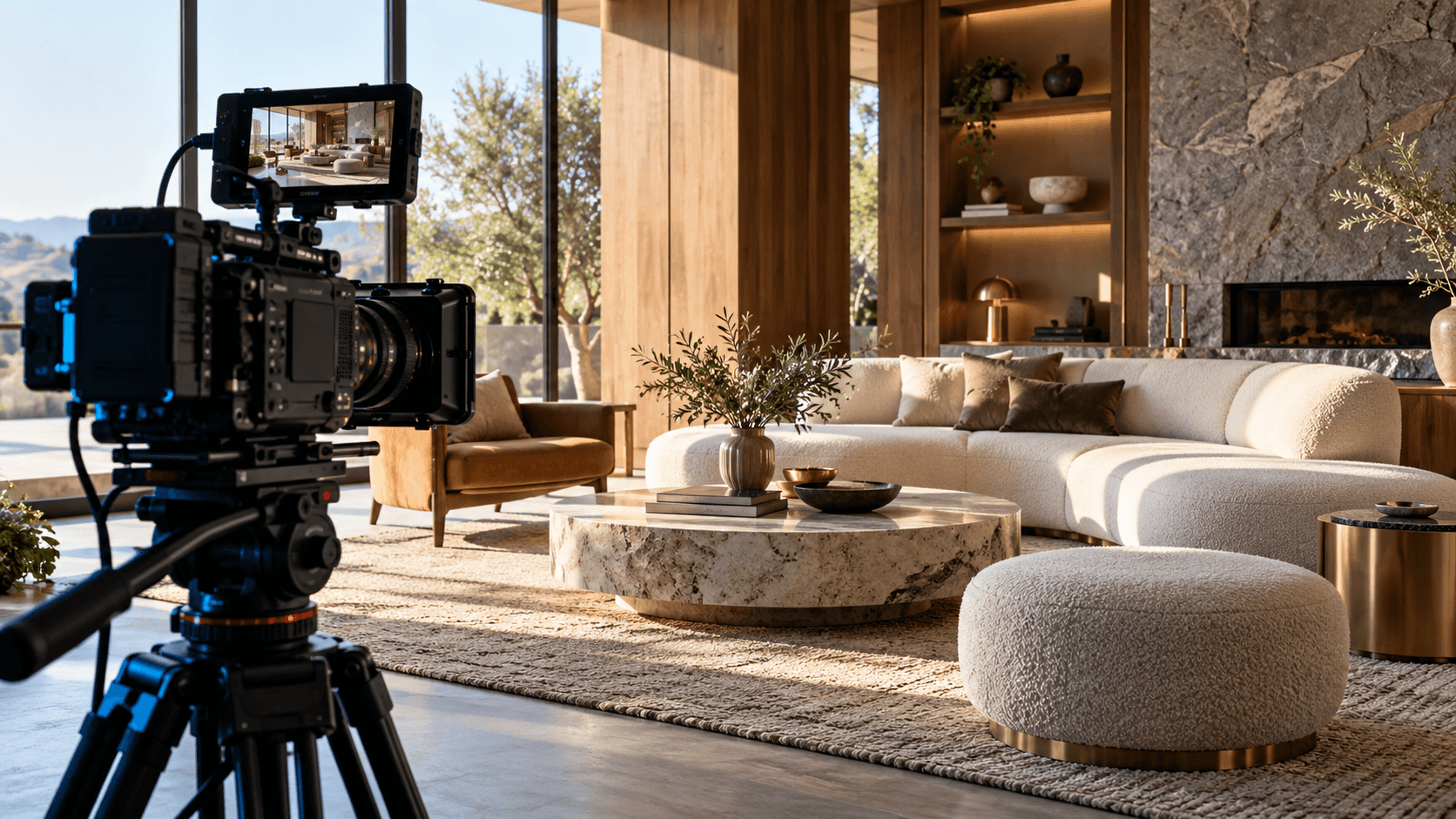
Start with the viewer
An interior film can introduce a studio, document a finished project or explain a particular design decision. Those are different jobs, even when the location is the same.
Write a short sentence describing who will watch the film and what they should understand afterwards. This gives the shoot and the edit a common direction without prescribing every camera movement.
Build a small story, not a room checklist
A wide view introduces the space. A movement through the room explains its layout. Close details reveal materials, lighting and craftsmanship. Put those ideas in an order that makes sense for the project.
Identify the few details that make the space distinctive. An unusual joinery solution or the way daylight meets a surface can be more informative than another angle of the same room.
Prepare the space and the permissions
Agree on access, timings and what can be shown. Check for personal belongings, paperwork, reflective surfaces and any people who may appear. The client should understand how the finished media will be used.
Walk through the space before filming. Note the lighting conditions, areas that need tidying and any rooms that are still being completed. Share these details with the person responsible for getting the location ready.
Plan where the edit will live
A vertical social reel and a website project film place different demands on framing and pacing. List the intended formats in the brief, along with captions, brand assets and any voiceover or music requirements.
Agree on a review process and keep feedback specific: the shot, the moment and the change requested. A clear brief does not remove creative freedom; it gives everyone a shared basis for making choices.